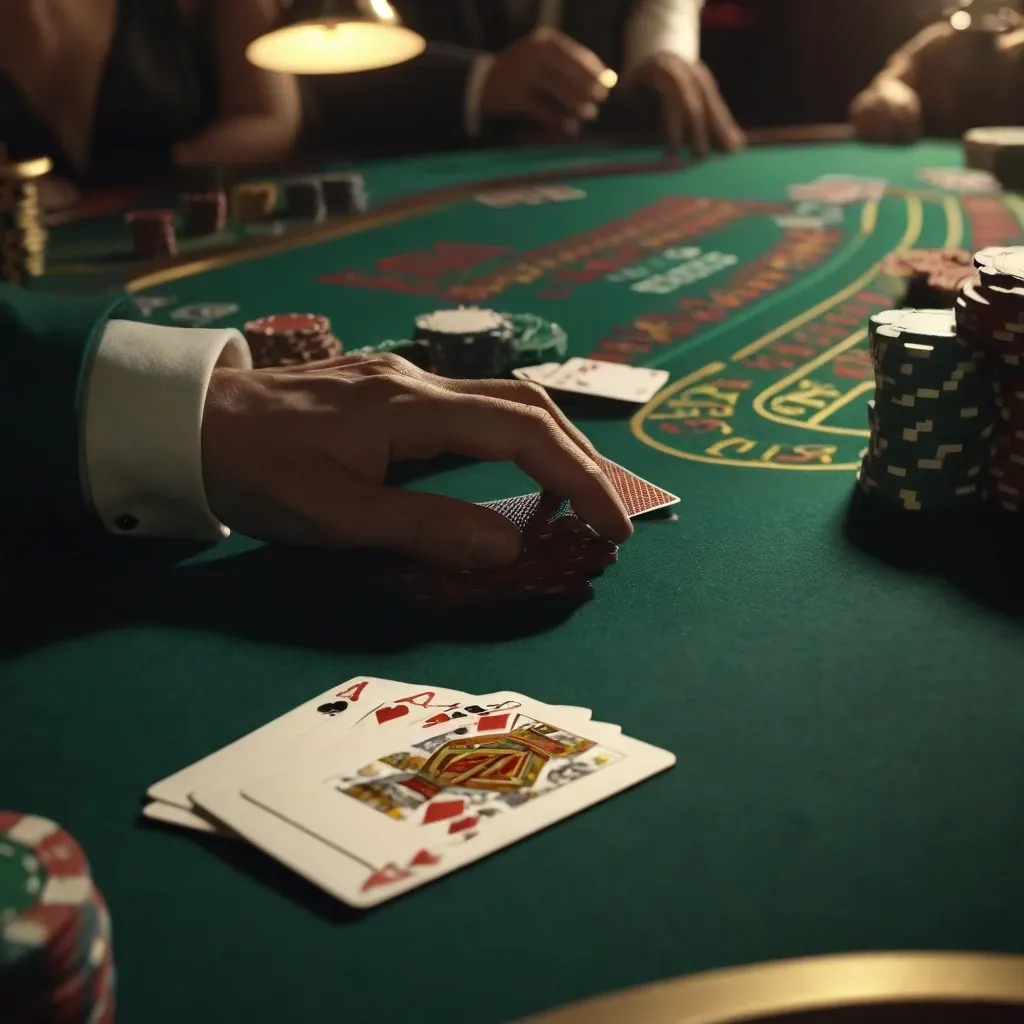
You’ve probably seen the ads promising huge wins at live casino games—flashing jackpots, smug winners, the whole spectacle. Here’s what the math actually says: winning consistently in the long-term profit sense? Not for most players. The house edge doesn’t vanish because you’re on a lucky streak. But here’s the twist—you can minimize losses and play with a razor-thin house edge if you choose the right games and adopt a cold-eyed strategy. Realistic expectations aren’t a buzzkill; they’re your only ally. Stick around, and we’ll hand you the actionable advice that separates illusion from reality.
The Foundation: House Edge and Rule Selection
Let’s cut the fluff. If you want to win at live dealer blackjack, you need to obsess over one thing: the house edge. Not the vibe of the dealer, not the fancy chips, not the background music. The math. Specifically, the rule set. Most players walk into a live lobby blind, pick the first table with a pretty face, and bleed money. Don’t be that person. The difference between a good table and a bad one is often a 0.8% swing in your favor—without you changing a single decision. That’s free money. Or, more accurately, less lost money.
Here’s the brutal truth: many live dealer tables are traps. They offer 6:5 payouts on blackjack instead of the standard 3:2. That single rule change spikes the house edge from around 0.4% to nearly 1.4%. You’re paying a 1% tax for no reason. Switching from a 1.2% edge 6:5 table to a 0.4% edge 3:2 table saves you 0.8% with zero skill change. That’s like finding a $20 bill on the ground every hour you play. So, what’s the checklist? Look for these four things: 3:2 naturals (non-negotiable), dealer stands on soft 17 (S17), double after split allowed (DAS), and late surrender available. If a table misses even one of these, your edge creeps up. And avoid tables with poor penetration—live games often cut 50-60% of the shoe, making card counting a joke. But more on that later.
Live vs. RNG: Which Has the Better Odds?
You might think random number generator (RNG) blackjack is cleaner, faster, and fairer. Wrong. Live dealer blackjack typically runs a 0.5% house edge, while RNG games hover between 0.6% and 1%. Why? Live tables often have better base rules—like S17 and surrender—that RNG versions skimp on. Plus, live games are slower (40-70 hands per hour vs. 200+ for RNG), which reduces your hourly expected loss. But here’s the kicker: penetration on live shoes (50-60%) makes counting useless. The search result nailed it: ‘A 3:2 shoe with surrender beats almost any 6:5 offering.’ So, pick live, but pick wisely.
How to Spot a Player-Friendly Table
I once watched a player sit at a 6:5 table for hours, unaware the rule was costing them an extra 1.4%. He was smiling, tipping the dealer, and losing slowly. Don’t be that guy. The ideal rule set is simple: 3:2 blackjack, dealer stands on soft 17, double after split allowed, late surrender, and no continuous shuffler. Avoid side bets like the plague—Perfect Pairs, 21+3, whatever. Their house edges range from 3% to 8%. That’s a sucker bet. And insurance? Always a 7.47% edge. Never take it. If the table has a CSM, walk away. If it has 6:5, walk away. If it has no surrender, think twice. Your time is money.
The Hidden Enemy: Continuous Shuffling Machines
Continuous shuffling machines (CSMs) are the silent killers of advantage play. They shuffle every card back into the shoe after each round, making the deck effectively random at all times. No count worth tracking—the variance overwhelms the signal. If you see a CSM, treat the game as purely random and rely solely on basic strategy. There’s no edge to be gained, no pattern to exploit. You’re just gambling. And in a CSM game, the house edge is fixed. So, if you’re serious about winning, avoid CSMs. They’re designed to kill any hope of a counting edge. Stick to hand-shuffled or automatic shufflers with decent penetration. Your bankroll will thank you.
The Only Strategy That Works: Basic Strategy and Discipline
Let’s cut the fluff. You can’t outthink math. The one proven path to shave the house edge down to its bare minimum—often around 0.5% in a standard game—is basic strategy. Memorise it, or better yet, keep a strategy chart glued to your eyeballs. Online blackjack? You’re allowed to use that chart. No one’s checking your second screen. Play by gut, and the house edge balloons to a brutal 2% to 5%. That’s not gambling; that’s donation. The cost of instinct is real: “playing by gut raises the house edge to 2-5%.” Here’s the actionable tip: Keep the chart open on a second screen or print it out if you’re at a live table. Don’t try to wing it. Your discipline is the only weapon against the odds.
Why Basic Strategy Is Non-Negotiable
Basic strategy isn’t optional; it’s the line between a fair fight and a massacre. Take a concrete mistake: splitting 10s against a dealer 6. Looks tempting, right? That single error adds about 0.5% to the house edge. Accumulate a few of those, and you’re giving away money faster than a slot player. Research shows that without strategy, the house edge jumps from 0.5% to 2-5%. That’s a fourfold increase. Commit to using a strategy chart every single hand. Never skip a decision. The math doesn’t care about your feelings.
Never Take Insurance or Side Bets
Insurance is the worst bet at the blackjack table. Period. The house edge on that side wager sits at a monstrous 7.47%. Even if the dealer peeks and shows an ace, the math screams decline. Your gut says “protect the hand,” but the numbers say you’re lighting money on fire. And side bets—like 21+3 or Perfect Pairs—are no better. They’re designed to look flashy while bleeding your bankroll. Stick to the main game. Decline every side offer. No exceptions.
Speed and Decision Time – Use It Wisely
Live blackjack moves slower than RNG-driven online games. That slower pace is actually a benefit. It forces you to pause, think, and apply the strategy chart. In RNG blackjack, players often rush—clicking without thought, letting instinct take over. Here, you get ten, fifteen, even twenty seconds per hand. Use them. Take the full time. Never rush a decision. Every hand is a new opportunity to play perfectly. Speed is the enemy of discipline. Slow down, win more.

Why Classical Advantage Play Fails in Live Dealer
Let’s cut through the noise. You’ve heard the legends, the whispered tales of card counters who beat the house. In a land-based casino, sure, it’s possible. But in the live dealer environment? Forget it. The live format has been quietly engineered to neutralize advantage play. Every single trick in the book—card counting, hole-card play, edge sorting—gets systematically dismantled before you even place a bet. The game looks real, feels real, but the math is rigged against any form of skill-based edge. The only path to a positive expectancy is through bonuses and comps, not through in-game skill. Period.
Penetration: The Silent Killer
Here’s the dirty little secret nobody talks about: penetration. In live dealer blackjack, the shoe depth is a joke. You’re looking at 50-60% penetration, max. That means the dealer cuts off nearly half the deck before you even start. With only 50% penetration, the true count rarely deviates enough to warrant a bet spread. Compare that to land-based casinos where some offer 75-80% penetration—a world of difference. When the count can’t move, your advantage evaporates. It’s like trying to surf in a bathtub. The math simply doesn’t work.
Continuous Shufflers and Other Safeguards
And then there’s the CSM. Some studios have moved to continuous shufflers even for classic blackjack. If you encounter one, treat it as a pure luck game. No system can beat it. The auto shuffler resets the odds every single hand. Your memory, your tracking, your counting—all useless. The studio protections are layered, deliberate, and designed to make you think you have a chance when you really don’t.
The Myth of the ‘Hot’ or ‘Cold’ Table
Players love to believe in streaks. They see the dealer bust five times in a row and think the next hand is a lock. That’s the gambler’s fallacy in action. Blackjack with CSM or even a shoe still has independent rounds. Just because the dealer busted five times in a row doesn’t mean the next hand is more likely to bust. The cards don’t remember. The table doesn’t have a memory. You’re chasing ghosts. The only thing that’s hot is your imagination.
Bankroll Management: The Real Key to Longevity
Let’s cut the fluff. You can memorize every blackjack chart, learn every poker tell, and master the roulette wheel’s spin—but without bankroll management, you’re just a gambler with a death wish. Variance is a beast; it doesn’t care about your “system.” It will chew you up and spit you out. The hard truth? Even the best strategy fails when the swings hit hard. You need a fortress, not a house of cards. Concrete numbers are your only friend here. The golden rule? A minimum buy-in of 40x your bet level. That’s not a suggestion; it’s a survival metric. I once saw a player with a $200 bankroll sit down at a $25 table. He ignored his stop loss, chased a single loss, and busted in 8 hands. Eight. That’s not bad luck; that’s a lack of discipline. Flat betting is your anchor. Systems like Martingale? They’re dangerous traps that promise recovery but deliver ruin. You’re not playing to win one hand; you’re playing to play tomorrow.
Session Buy-In and Bet Sizing Rules
Here’s the rule: For a $25 table, bring $1,000. No exceptions. This isn’t about being flashy; it’s about giving yourself enough rounds to ride out the inevitable variance. You need the ammunition to survive the cold streaks. Never increase your bets after a loss—that’s the path to the poorhouse. Instead, maintain a fixed bet or stick to a percentage of your bankroll, like 1-2%. This keeps you in the game when the deck turns sour.
Loss Limits and Win Targets
Locking in profits isn’t cowardly; it’s smart. If you lose $250 at a $25 table, walk away. That’s your stop loss. Don’t negotiate with yourself. Similarly, set a win target—say, 20 buy-ins. When you hit it, you’re done. This prevents you from giving back your winnings during a cold streak. Discipline here is more important than any strategy you’ll ever learn. It’s the difference between a player and a victim.
Emotional Control: The Underrated Skill
Here’s the kicker: live dealers can make losses feel less mechanical. Their friendly chatter tricks your brain into thinking it’s just a game, encouraging longer play. That’s dangerous. Set a timer or a session limit before you even sit down. Don’t let a friendly dealer talk you into playing just one more hand. That “one more hand” is where bankrolls die. Tilt is real; emotional control is your shield.

Hidden Value: Bonuses, Comps, and Rule Shopping
Let’s cut the noise. The only realistic way to squeeze a mathematical edge out of live blackjack isn’t through card counting or some mythical betting system. It’s through the boring stuff: bonus offers, comps, and aggressively shopping for the best rules. Forget trying to beat the dealer with skill alone—the house edge is a brick wall. Instead, you need to manipulate the system around the game. This is where the real value hides. Bonuses with clear wagering requirements can flip the script into positive EV territory, but you have to read the fine print like a hawk. Blackjack often gets hammered with a low weighting—sometimes just 10% to 20% towards wagering. That changes the math drastically. Then there’s comp optimisation. If your rakeback or comp rate exceeds the house edge of the specific table you’re playing, you’re technically playing at a slight positive. It’s thin, but it’s real. And rule shopping? That’s the low-hanging fruit. Switching operators to find a game with a 0.4% edge versus a 1.2% edge is a 0.8% improvement with zero change in your skill level. Players who keep asking ‘which format is beatable’ tend to lose to players who stopped asking and started shopping.
How to Evaluate a Bonus Offer for Live Blackjack
Don’t just grab any bonus. You need a formula. Here’s the simple math: EV = bonus amount – (wagering house edge game weighting). Example time. A $100 bonus with 40x wagering on blackjack weighted at 20% means you must wager $8,000. At a 0.5% house edge, your expected loss is $40. So, EV = $60. That’s a positive expectation. But here’s the chaos: many casinos outright exclude live blackjack from bonuses or slap on higher wagering requirements. Always check the terms. If the weighting is 10%, that same bonus turns into a trap.
Comp and Loyalty Arbitrage
High-tier VIP programmes are where the sneaky value lives. Some offer 0.5% or more cashback on losses. If you’re playing perfect basic strategy with a 0.5% house edge, that cashback effectively eliminates the edge. You’re playing at break-even or slightly above. Some casinos even offer ‘lossback’ up to 10% on net losses. This is the closest you get to consistent winning without cheating. It’s not glamorous, but it’s profitable.
The Power of Switching Operators
Different live studios offer different rules. A player who moves from a 6:5 blackjack table to a 3:2 table picks up a 1.4% edge for free. No extra skill required. Keep a list of favourable operators. The best-rule table beats the worst-rule table by more than the format gap itself. Stop grinding at one casino. Start shopping.
Conclusion
Let’s cut the noise. You can’t beat the live casino in the long run, but you can play remarkably close to even. That’s the real win. It’s not about magic systems or lucky streaks—it’s about discipline and math. Three actionable takeaways to lock in: first, always hunt for tables offering 3:2 blackjack with S17 and DAS—anything less is a trap. Second, drill basic strategy until it’s muscle memory; every hand, no exceptions. Third, never play without bonuses or comps that flip the math to positive EV—that’s your only real edge. Apply these principles, and you’ll be ahead of 99% of players. Stop chasing the impossible. Start playing smarter.