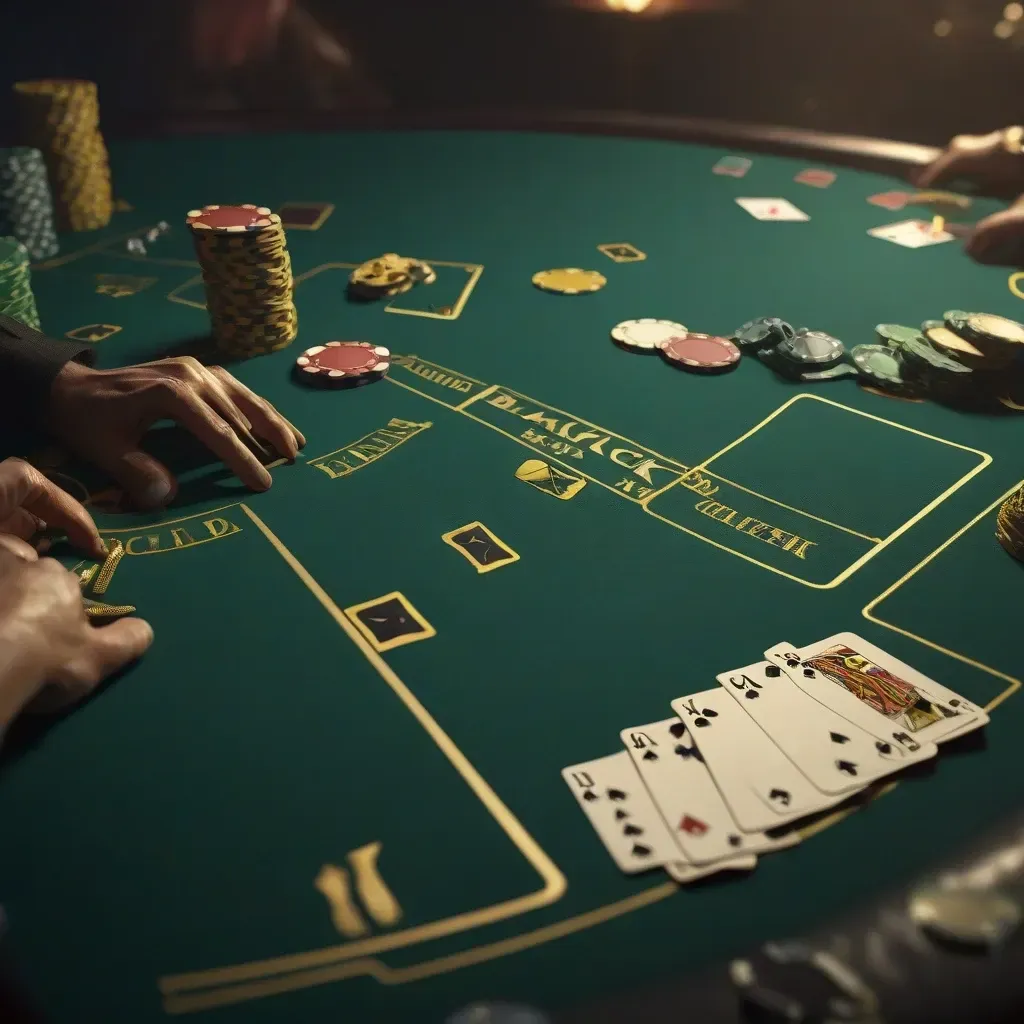
You are asking the wrong question. The endless debate over online blackjack vs casino blackjack misses the mark entirely. After grinding through thousands of hands in both sterile digital lobbies and smoky casino pits, the real truth emerges: the venue is a smokescreen. The deciding factor isn’t where you play; it’s what set of rules you agree to before a single card is dealt. Most players lose consistently not because of the format, but because they fail to perform a brutal, boring blackjack rules comparison. They ignore the subtle tweaks that inflate the blackjack house edge. They let the environment control the pace. Whether staring at a screen or a dealer, the psychological traps are different, but equally deadly. This breakdown cuts through the noise to reveal the hidden conditions that actually determine the best blackjack odds, regardless of your chosen battlefield.
The Myth of Location: Why the ‘Where’ Matters Less Than the ‘What’
Forget the clinking chips, the velvet ropes, the dealer’s practiced smile. That whole atmosphere—it’s a distraction. The math behind blackjack has zero loyalty to any physical address. The house edge is carved into stone by the rule set, not by whether you’re staring at a human hand or a glowing screen driven by a random number generator. A terrible table in a plush casino is still a terrible table, and a generous rule set on a cheap laptop can be your ticket to a fair fight.
Here’s the cold, hard data: the house edge comes down to specifics—does the dealer hit or stand on soft 17? Can you double after splitting? Is surrender on the table? Compare two hypothetical games. Game A: 3:2 blackjack payout, dealer stands on soft 17, late surrender allowed. Basic strategy yields a house edge of roughly 0.4%. Game B: 6:5 blackjack payout, dealer hits soft 17, no surrender. Same basic strategy? You’re now facing a house edge north of 2.2%. That’s not a minor tweak. That’s a chasm. The difference isn’t the venue; it’s the fine print.
And here’s where the irony bites. In the last decade, physical casinos have been aggressively pushing 6:5 tables, especially at lower minimums, because it pads their bottom line. Meanwhile, online platforms—both RNG-based and live dealer—often still offer plenty of 6-deck 3:2 games with reasonable rules. The ‘where’ is irrelevant; the ‘what’ of the rule sheet is everything. Walk past the glamour. Read the felt.
The 3:2 vs. 6:5 Trap
Let’s get straight to the math. When a blackjack pays 3:2, you get 1.5 times your bet. At 6:5, you get 1.2 times your bet. That 0.3 difference per natural sounds small until you run the numbers. It adds roughly 1.4% to the house edge—more than doubling your disadvantage on an otherwise decent game. That’s not a gamble; it’s a grind. Last time I stumbled on a 6:5 table in a live casino, the dealer was charming, the drinks were free, and the math was criminal. I turned around. You should too. The beautiful thing about online blackjack? You can browse through a dozen different tables in thirty seconds, filter for 3:2 payouts, and never touch a 6:5 game. The power of choice—without the smoky air.
The Deck Penetration Problem for Card Counters
For the 99% of players who don’t count cards, this next bit is academic. Keep playing basic strategy; you’re fine. But for the remaining 1% who track aces and tens, deck penetration is the holy grail. A live dealer shoe that cuts off a third of the cards before reshuffling? That’s a nightmare for a counter. The deeper the penetration, the more information you have. Most live dealer tables are engineered to shuffle early, specifically to neutralize advantage play. Online RNG games? Penetration is effectively infinite—every shuffle is a fresh deck, so card counting is useless there. The irony is that the few physical casinos still offering single-deck games with deep penetration are the last refuge for serious counters. But those tables are rare, watched closely, and often have pit bosses counting right back at you. So pick your poison: deep penetration with heat, or fair rules with no heat. Either way, know what you’re chasing.
The Speed Factor: Why ‘Fast’ Is a Double-Edged Sword
Online blackjack moves at a blistering pace. A live table in a brick-and-mortar casino shuffles through roughly 50 to 70 hands per hour. Sit down at an RNG-driven online table, and that number rockets to 200, sometimes 300 hands per hour. That’s three to four times more action in the same sixty minutes. For the undisciplined, this speed is a trap. The house edge applies per hand, not per session. More hands means more opportunities for that edge to grind you down—pure math, no exceptions.
Think about it. In a live casino, a bad beat gives you a minute to collect yourself. You watch the dealer shuffle, maybe sip your drink, reset your focus. Online, you’ve lost five more hands before your drink arrives. The rhythm becomes a blur. Variance, which already makes blackjack a wild ride, gets compressed into a shorter time frame. Bankroll management? That’s the first thing to fly out the window when the deals come faster than you can think. Speed only benefits players who maintain perfect basic strategy for hour after hour. Most people don’t. After thirty minutes of rapid play, fatigue sets in, deviations creep up, and the house edge swells.
So the key question isn’t whether online blackjack is faster—it is. The question is whether you have the discipline to handle that speed without letting it shred your bankroll. For most casual players, the answer is no.
When Speed Hurts: Chasing Losses in High Gear
Consider a player we’ll call Alex. He sat down at an online blackjack table with a $200 bankroll, planning to play conservatively. Twenty minutes later, after a string of dealer blackjacks and double-down losses, he was down $80. In a live casino, the slow pace might have let him step back. Online, the next hand already started. He chased—doubling bets, splitting tens, ignoring basic strategy. Within another ten minutes, the $200 was gone. The game was too fast for his emotions to keep up. Live tables have natural brakes: the shuffle, the dealer’s deliberate motions, the social pressure of other players watching. Online, those brakes are absent. Actionable advice: set a timer, enforce session limits on the platform, and treat every online session like a separate casino trip—walk away when the bell rings.
When Speed Helps: Efficiency for the Disciplined Player
Now flip the coin. Some savvy players use online blackjack’s velocity to work through wagering requirements on deposit bonuses faster. If you have a bonus with a 20x playthrough on blackjack, those 250 hands per hour can clear it in a fraction of the time a live table would demand. But here’s the catch—few bonuses count blackjack at full weight. Many exclude it entirely or offer reduced contribution (like 10% or 20%). Before you treat speed as a shortcut, read the fine print. This is an advanced technique for players who already track their play and understand bonus math. For beginners, it’s a recipe for getting burned faster, not smarter.
The Psychological War: Social Pressure vs. Distraction Pressure
Live casinos hit you with a very specific kind of heat. It’s not the cards; it’s the crowd. The dealer makes small talk while you’re trying to recall basic strategy for a soft 18. The player to your left sighs when you take too long. The cocktail waitress materializes just as the count turns positive. The social spotlight is relentless. Online is a different beast entirely. The pressure shifts from people to a machine designed to fracture focus. Pop-ups for side bets scream for attention. A phone buzzes. A notification drops down. Every element is a distraction button. And the worst part? A single click lets you double your bet with zero shame, no one watching. Neither environment is ‘better’—they just attack different weaknesses. A personal rule that works: when playing live, wear headphones to block the chatter. When playing online, close every other tab and physically put your phone in another room. The enemy is chaos; the defense is structure.
The Live Casino: Managing the Social Spotlight
Early in my playing days, I held a hard 16 against a dealer’s 7. Basic strategy said hit. But the table was dead silent. The player next to me had already lost three hands in a row. I felt his eyes burning a hole in my back. So I stood. I looked foolish anyway when the dealer flipped a 10 and I busted with a perfect face. The truth is simple: basic strategy is mathematically proven. It doesn’t care about your feelings or the guy next to you. Emotions are the enemy of edge. If you find yourself caring what the player next to you thinks, you’re playing for the wrong reasons. The only spotlight that matters is the one on the dealer’s hand.
The Online Arena: Fighting the Dopamine Machine
Online blackjack isn’t a game; it’s a system engineered to keep you feeding the machine. The UI design uses bright colors and urgent buttons. Sound effects mimic a win even when you lose. Near-miss algorithms in RNG games are specifically coded to make you feel ‘so close’—a psychological trick to trigger a chase. It’s manipulative but not illegal. Insiders know the red flags. Watch for continuous shuffling machines that kill any card counting potential. Be wary of tables where side bets are mandatory or auto-play buttons are too easy to access. A major red flag is the absence of easy-to-find deposit limits. If they don’t want you to set boundaries, they want your entire bankroll. Treat every pop-up as a trap. Click nothing unless you intended to click it a minute ago.

The Comparison Advantage: Why Online Wins (and Loses) on Shopping Power
The single greatest edge a modern blackjack player holds isn’t a card-counting system—it’s the ability to compare every variable before a single chip hits the felt. Online, you can open five tabs across different operators, each displaying the exact house edge, minimum bet, and rule set within seconds. That’s the secret weapon. In a live casino, you’re locked into whatever that floor decides to offer. You might walk the entire building hunting for a 3:2 table with a $10 minimum, only to find $25 6:5 options everywhere. Here’s a real example: a player once walked a live floor for twenty minutes—nothing under $25 minimums and all 6:5. Online, a quick search pulled up a $5 minimum 3:2 game with surrender in under thirty seconds. That comparison power alone can save more than any basic strategy chart. Yes, the tactile feel of felt and chips is lost, but the ability to instantly filter for the best online blackjack rules and table minimums makes digital play the clear winner for informed players who value their bankroll.
Bonuses: The Hidden Variable No One Talks About
Blackjack bonus offers often get dismissed as casino gimmicks, but they can be a legitimate tiebreaker when choosing between otherwise identical games. If two online blackjack tables have the same rules and house edge, the one attached to a smart bonus offer might be the better play—but tread carefully. Many players jump at any sign-up deal without checking the fine print. High wagering requirements, especially 40x or more, turn a bonus into a trap for blackjack because the game’s low house edge means you’ll struggle to meet playthrough without massive variance. Simple rule: never play for a bonus unless you have read the terms and the game contributes 100% to wagering requirements. A 30x bonus on a 3:2 table with full surrender can boost expected value. A 50x bonus on a 6:5 table with no surrender? That’s a losing bet before you even start. Use bonuses as a tiebreaker, not a primary reason to play.
The Final Verdict: Stop Asking ‘Which Is Better’ and Start Asking ‘Which Rules Are Better’
The whole “online vs. live” debate is a trap. It misses the point entirely. The real question isn’t which format wins—it’s which set of rules you’re willing to accept. And that answer shifts depending on where you sit.
For most players, online blackjack throws the better deal most days. Lower minimums mean you can stretch a bankroll. 3:2 tables are easier to find than a clean ashtray in Vegas. And nobody rushes you—you can sit there, sip coffee, and take a minute on every decision. That’s pure value.
But don’t count out the live pit. A disciplined player who knows how to hunt for single-deck games, dealer-stand-on-soft-17 rules, and decent penetration can match or beat what the screen offers. The trade-off? You deal with the pace of the table, the chatter, the smoke—and the social buzz if that’s your thing.
So here’s a blunt decision framework: Choose online if you value convenience, low minimums, and rule shopping. Choose live if you value pace control, a social experience, and the rare single-deck opportunity. Both can work—neither is inherently superior.
The next time you sit down to play—whether on a screen or a felt table—check the rules first. That single habit will do more for your bottom line than any strategy guide ever could.